
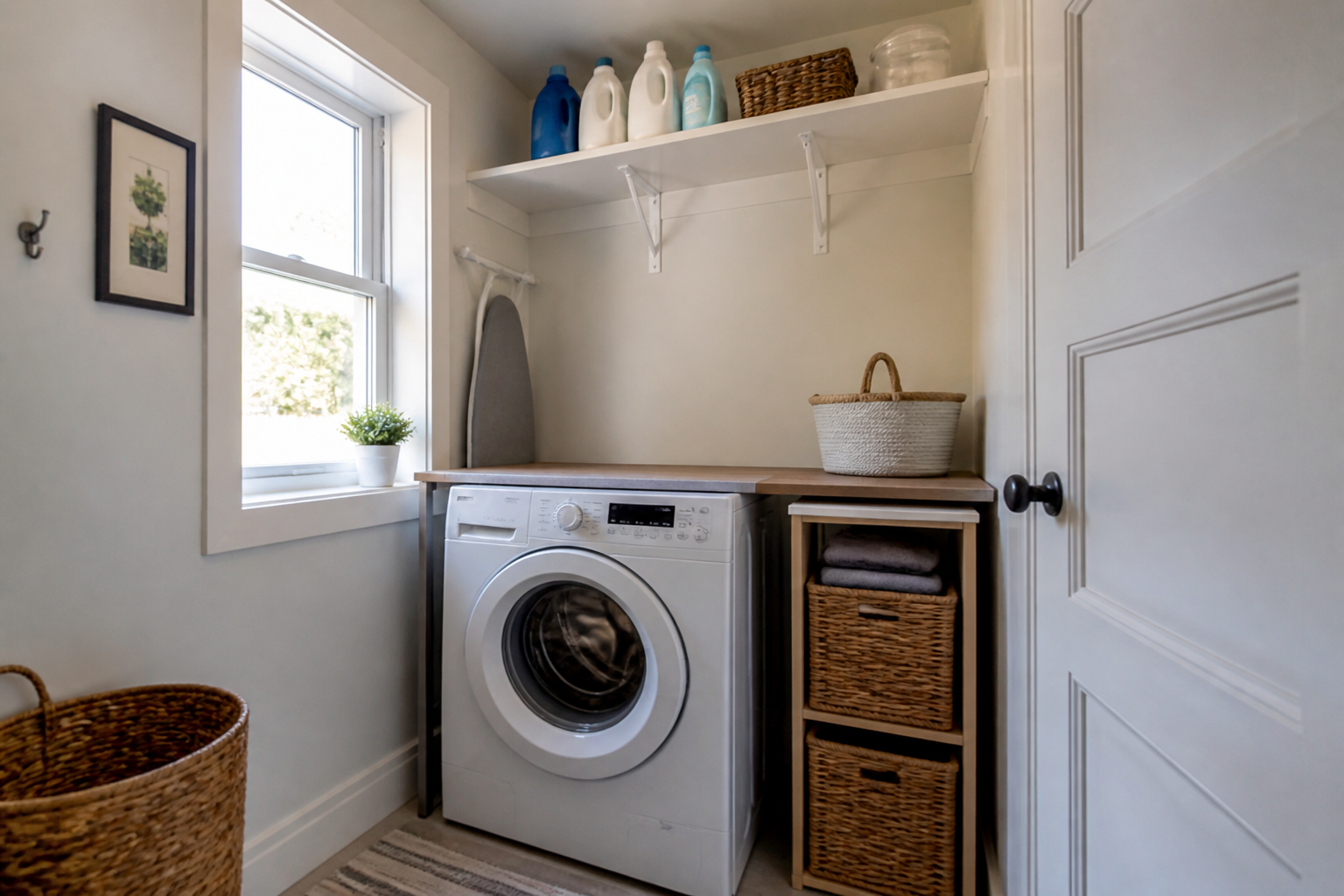
A shared laundry corner needs detergent accessible to adults but away from children and pets. That ordinary situation is the most useful place to begin—not with a bestseller badge or a long feature list, but with the job the item needs to do on a normal day.
For this guide, we focused on secure placement, spill control, and labels that preserve safety directions. Those qualities tend to matter after the novelty wears off, when an item must be cleaned, moved, stored, or used by more than one person.
The everyday problem to solve
Good household purchases remove a repeated point of friction. Before comparing models, notice when the problem occurs, who handles it, and what nearby space is genuinely available. A solution that requires clearing a counter, finding an attachment, or moving three other things may be technically capable but practically inconvenient.
Keep products in original packaging whenever safety guidance requires it. A two-minute measurement now is more useful than a generous return policy later.
Also consider the least enthusiastic person in the household. If a storage system is difficult to reset or a cleaning tool is awkward to prepare, it may not survive a busy week. Favor a clear default position, visible controls, and maintenance you can explain in one sentence.
What matters when comparing options
Fit and access
Record width, depth, height, door swing, outlet position, and the path needed to move the item into place. Product dimensions may omit handles, lids, hoses, or the clearance needed to operate them. If the product lives in a cabinet, measure the opening as well as the interior.
Cleaning and upkeep
Look for removable parts, reachable corners, and care instructions that match your routine. A product that performs well but requires special cleaning after every use is best for a household willing to maintain it. Published dishwasher-safe or machine-washable claims should still be checked against the exact model.
Materials and replaceable parts
Consider which surfaces touch food, water, flooring, or skin. Check whether filters, pads, lids, batteries, or other wear parts are sold separately. Replacement availability often matters more over time than one extra feature on the box.
The main tradeoff
The honest limitation here is that decorative dispensers can hide dosage and hazard information. That does not make the category a poor choice; it simply identifies who should pause. When two products look similar, choose the compromise your household can live with rather than the longest specification list.
AptHaven’s before-you-buy checklist
- Measure the usable location and access route.
- Confirm the care routine in the manufacturer’s instructions.
- Price any filters, refills, or replacement parts for a full year.
- Read recent low-star feedback for repeated fit or durability issues.
- Choose a return route appropriate for a bulky or opened household item.
Who this approach suits
This guide is most useful for shoppers who value a dependable routine over novelty: renters protecting limited space, households sharing chores, and anyone replacing an item that already failed in a predictable way. It is less useful if your space has unusual installation requirements or if you need professional-grade performance; in those cases, consult the manufacturer or a qualified installer.
A practical decision
Write down three non-negotiables and one compromise. Compare only products that meet the non-negotiables, then use the compromise to narrow the list. For laundry detergent storage for a safer, calmer routine, we would keep attention on secure placement, spill control, and labels that preserve safety directions, verify measurements, and avoid paying extra for modes that do not change the everyday workflow.
Prices, availability, and specifications change. AptHaven recommends confirming current details on the manufacturer or retailer page immediately before purchase.